Well… the short answer is yes, it can work. While I always recommend using a standalone condenser microphone, a pop filter, and a treated vocal booth, you can certainly start with your mobile device. However, it’s important to manage your expectations: a smartphone or a headset microphone won’t deliver “studio-grade” transparency right out of the box.
That said, such recordings can still be accepted by ACX if handled correctly. But if you’re aiming for top-tier quality, a dedicated microphone is eventually a must.
If you decide to go the mobile route, please follow these essential rules to get the best possible result:
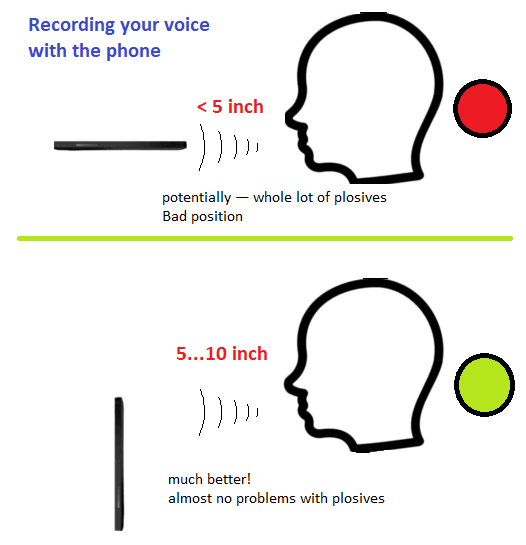
- Mind the Distance: Don’t get too close to the device. Aim for about 5–10 inches of space.
- Stay “Off-Axis”: Never speak directly into the mic capsule. Place the device vertically and slightly to the side or below your mouth level (check the diagram above).
- The War on Plosives: The main enemy of mobile recording is “popping” sounds (P, B, T). These are considered technical defects, and your engineer will have to spend a lot of time — and your money — trying to clean them up.
And yet… even the humblest smartphone can sound decent in a room full of pillows and blankets.
Need a professional ear to assess your mobile recording? Or want me to polish your files for publication? Contact me, and let’s see what we can do with your sound!
— Stan